

The difference between industry leaders and followers often comes down to one critical factor: decision quality. But what separates good decisions from transformative ones? The answer lies at the intersection of human expertise and artificial intelligence—a space we call decision intelligence.
How Decision Intelligence Platforms Are Revolutionizing Leadership
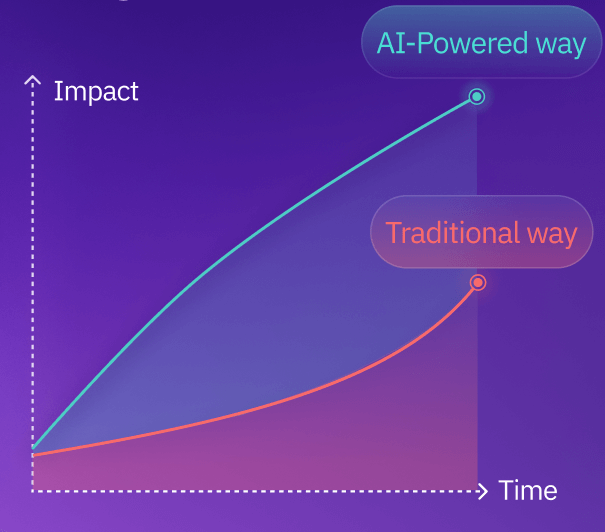
Decision intelligence isn’t just another business buzzword—it’s the evolution of decision-making for the AI era. While traditional decision frameworks rely heavily on human intuition and historical data, decision intelligence platforms amplify leadership effectiveness by combining the best of human judgment with computational power.
We believe that by 2026, majority of organizations will use decision intelligence platforms to drive competitive advantage. This explosive growth reflects a fundamental truth: the future belongs to leaders who can seamlessly integrate AI into their decision processes.
The Hidden Cost of Decision Latency
Every organization faces a critical metric few measure: decision latency—the time between when a decision could be made and when it actually is made.
The hidden costs of delayed decisions include:
- Market opportunities seized by more agile competitors
- Resources tied up in extended analysis paralysis
- Talent disengagement when action is repeatedly postponed
- Diminishing returns on eventual decisions made too late
Decision intelligence platforms target this latency, providing leaders with algorithmic support to move at market speed.
The Human-AI Collaboration Advantage
The most powerful aspect of decision intelligence isn’t artificial intelligence replacing human judgment—it’s the synergy created when both work together.
This “centaur model” of leadership—where human intuition and creativity combine with AI’s computational power—creates decision capabilities impossible through either alone:
- Pattern recognition at scale: AI identifies trends across vast datasets that would be invisible to human analysis
- Cognitive bias mitigation: Algorithmic inputs help counter the many cognitive biases that affect human decision-making
- Scenario simulation: AI enables testing multiple decision pathways before committing resources
- Decision confidence scoring: Leaders gain quantified confidence levels for high-stakes decisions
Implementing a Decision Intelligence Platform in Your Organization
For executives looking to implement decision intelligence, the pathway typically follows four stages:
1. Decision Mapping
Before implementing AI, map your organization’s decision ecosystem. Identify:
- High-volume operational decisions that could benefit from automation
- Strategic decisions requiring enhanced human judgment
- Decision bottlenecks creating organizational friction
- Authority boundaries that delay action
2. Augmentation Before Automation
The most successful implementations begin by augmenting existing decision processes rather than completely reimagining them. This approach:
- Builds organizational trust in AI systems
- Creates clear before/after metrics to demonstrate value
- Allows leaders to experience enhanced decision-making firsthand
- Provides time for cultural adaptation
3. Building Decision Intelligence Networks
Decision intelligence thrives in networked environments where:
- Data flows freely between departments
- Decision criteria are transparent and consistent
- Leadership has visibility into decision velocity metrics
- Learning loops capture outcomes to improve future decisions
4. Developing Decision Intelligence Leadership
Organizations need leaders capable of working in partnership with AI systems. This requires developing:
- Data literacy—the ability to interpret AI-generated insights
- Algorithm awareness—understanding AI strengths and limitations
- Decision confidence—knowing when to trust or question AI recommendations
- Ethical frameworks—ensuring AI-assisted decisions align with organizational values
The Competitive Imperative of Decision Intelligence
Competitive advantage doesn’t come from having better information—it comes from making better decisions with the information you have. Companies embracing decision intelligence are reporting:
- 35% faster time-to-market for new products
- 28% improvement in operational efficiency
- 41% more accurate forecasting
- 23% higher employee satisfaction with decision processes
The Future of Leadership in the Age of AI
As AI capabilities continue to advance, the definition of effective leadership is evolving. Tomorrow’s most successful leaders won’t be those with the most experience or intuition alone—they’ll be those who can effectively partner with intelligent systems to make decisions at a speed and quality unattainable by either humans or machines independently.
Decision intelligence platforms aren’t replacing leadership judgment—they’re amplifying it, creating a new competitive playing field where the advantage goes to those who embrace this powerful partnership.
The question isn’t whether your organization should implement decision intelligence, but how quickly you can integrate it before competitors gain an insurmountable advantage in decision velocity and quality.
Are you ready to lead in the age of decision intelligence?
Want to learn how Impro.AI can transform your organization’s decision capabilities? Contact our team for a personalized demonstration of how Impro.AI is designed specifically for enterprise leadership teams.